
Fresh Food in Winter: Why Families Are Turning to Microgreens
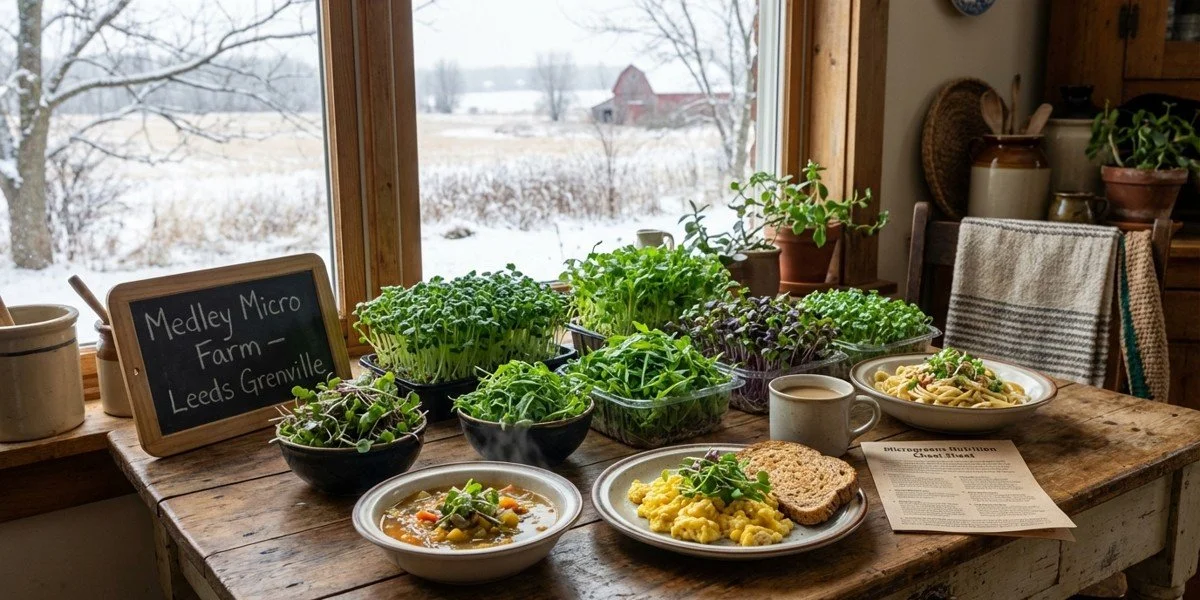
The garden is still frozen solid. The farmers’ market is closed until spring. And the broccoli at the grocery store was picked weeks ago, somewhere in 1000 km to the south.
If you've ever felt like eating fresh, nutritious food in winter is either expensive, inconvenient, or both, you're not imagining it. Access to genuinely fresh, locally grown produce drops significantly between November and April in most of Ontario, and the gap between "fresh" and "nutritious" widens considerably when produce has been in transit for weeks.
It's one of the reasons more families in Eastern Ontario are turning to microgreens.
Why Winter is the Hardest Season for Fresh Nutrition
Most of the fresh produce sold in Canadian grocery stores during winter months is grown in the southern United States, Mexico, or further afield and shipped thousands of kilometres before it reaches your grocery store.
The challenge isn't just the distance. Vegetables begin losing nutrients the moment they're harvested. Vitamin C, folate, and other water-soluble nutrients degrade during storage and transport. By the time that "fresh" bunch of kale or head of broccoli arrives at your store, its nutritional peak may have passed days or weeks ago.
For families trying to eat well through the winter, and to stay healthy during cold and flu season, this is a real problem worth solving.
What's Growing Year-Round, Right Here in Leeds Grenville
Microgreens are grown indoors, in controlled conditions, year-round. There's no frost, no shipping delay, and no waiting until May for the first harvest. At Medley Micro Farm, we grow microgreens weekly and make them available fresh to local customers in Eastern Ontario.
That means the broccoli microgreens you pick up on a Thursday were in the ground earlier that same week. The nutrients haven't had time to degrade. The flavour is at its best.
This is the difference between local food and imported food, and it's a difference that matters nutritionally, not just philosophically.
Small Greens, Big Winter Impact
Microgreens are also one of the most efficient ways to get dense nutrition into winter meals without dramatic changes to how you cook.
Broccoli microgreens contain up to 100 times more sulforaphane than mature broccoli, a compound with well-documented immune-supporting and anti-inflammatory properties, which matters even more during the winter months when colds and viruses circulate.
Arugula microgreens are rich in vitamins A, C, and K, the same vitamins we're often told to prioritize for immune and bone health during winter. A handful on your pasta or scrambled eggs adds more nutrition than you'd expect from something so small.
Mustard microgreens are loaded with glucosinolates and antioxidants that help the body manage inflammation, something that tends to increase during cold, sedentary winter months.
A Local Solution That Fits Real Life
We started growing microgreens at Medley Micro Farm for exactly this reason. Growing up in families that preserved and grew much of their own food, we understood early that the quality of what you eat in winter is directly connected to how you feel in winter.
We wanted to make that kind of fresh, nutrient-dense food available to our community year-round. And we wanted to do it using organic-style methods: no pesticides, no herbicides, just clean food grown with care.
A portion of every harvest also goes to Loaves and Fishes, a local meal program in our community, because good food should be accessible to everyone, regardless of the season or their circumstances.
Ready to See What We Grow?
We've put together a free Microgreens Nutrition Cheat Sheet with a variety-by-variety breakdown of what we grow and it includes flavour profiles, key nutrients, and ideas for how to use each one.
Disclaimer: This article and the associated website do not provide medical or nutritional advice. The information and material contained on this website are for informational and/or entertainment purposes only. No material on this site is a substitute for professional medical advice, diagnosis, or treatment.
Always seek your physicians' or qualified nutritionists' advice before undertaking a new healthcare regimen or using any information you have read on this website to treat or prevent any condition.