
Winter Citrus & Microgreen Salad: A Bright, Simple Recipe for Cold Days
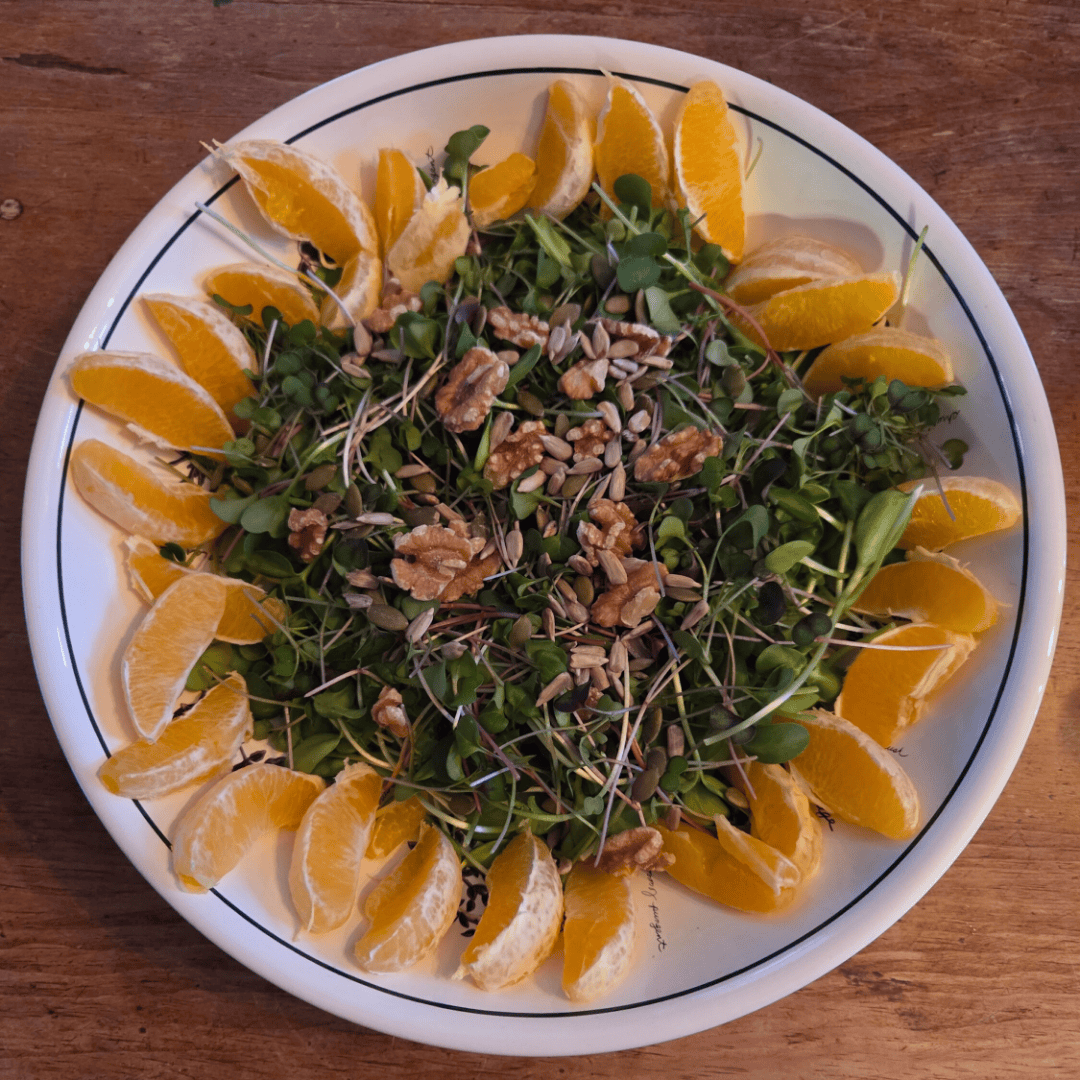
When Winter Meals Start Feeling Heavy
By February, most of us are eating warmer, heartier meals. Soups, stews, roasted vegetables, casseroles. They’re comforting and they make sense in cold weather.
But after a while, everything starts to feel a little beige. That’s when something bright and fresh can completely shift a meal. You don’t need a full summer salad with tomatoes and cucumbers shipped from across the continent. Sometimes you just need contrast. A little acidity. A little crunch. Something green that hasn’t travelled for weeks. This simple winter citrus and microgreen salad does exactly that. It’s quick. It uses ingredients that are realistic to find in a Canadian winter. And it pairs easily with almost any main dish.
Why Citrus Works So Well in Winter
One thing available in winter in Canada are citrus fruits. Oranges, grapefruits, and clementines are at their best when we’re at our coldest. They store well, they travel well, and they bring a natural brightness that winter meals often lack.
They also naturally contain vitamin C, which plays a role in immune function. That’s helpful this time of year but just as important is the way citrus makes heavier meals feel lighter.
When you combine citrus with locally grown microgreens, you get a mix of freshness and nutrient density that balances winter cooking beautifully.
Microgreens are harvested young, when nutrients are concentrated, and can be grown locally even in January . That means you’re adding something genuinely fresh to your plate, not just decorative greens.
The Recipe
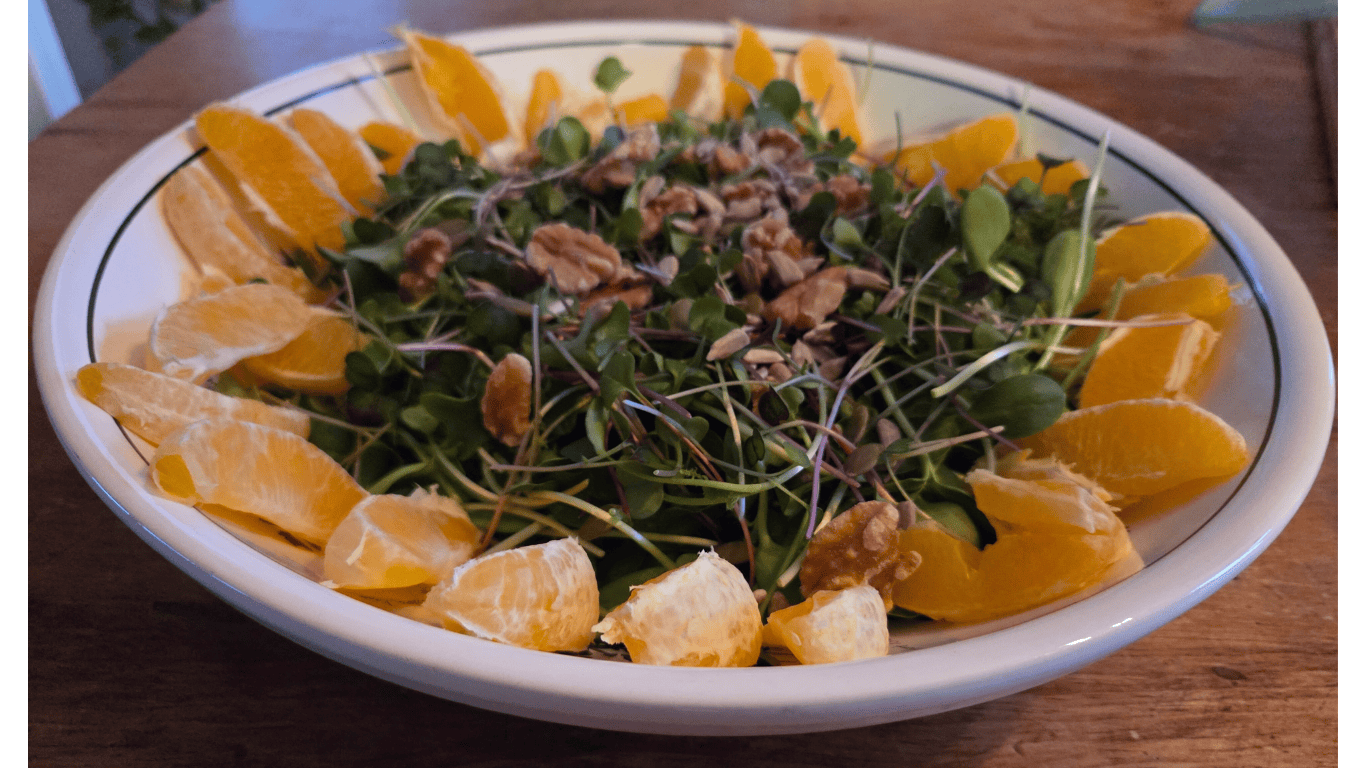
This isn’t complicated. That’s the point.
Ingredients
1 orange of your choice (I use navel but if you use smaller ones you may just need more)
1 package of Medley Mix (pea, sunflower, radish, or a mix)
A small handful of toasted pumpkin seeds, walnuts and sunflower seeds
A drizzle of good olive oil
A squeeze of fresh lemon (optional)
Pinch of sea salt
Freshly cracked black pepper
That’s it.
How to Make It
Start by peeling the oranges and breaking them into rounds or segments. If you have the patience, you can remove the membranes for a cleaner presentation, but it’s not necessary.
Place the microgreens on a plate and arrange orange slices around them. Don’t bury them. Let them stay light and airy.
Sprinkle the toasted seeds or nuts for crunch. Drizzle with olive oil and, if you like a little extra brightness, add a small squeeze of lemon.
Finish with a pinch of sea salt and fresh pepper.
It takes five minutes, maybe less.
Why This Works Nutritionally
This salad isn’t meant to be a full meal. It’s a companion.
The citrus provides vitamin C and hydration. The microgreens contribute concentrated plant nutrients and antioxidants . The olive oil adds healthy fats that help with the absorption of fat-soluble vitamins.
And the seeds or nuts bring texture and satiety.
Together, it turns a heavier winter dinner into something more balanced, without adding complexity.
Pair It With What You’re Already Cooking
This is where people sometimes overthink recipes.
You don’t need to build a meal around this salad. Just use it alongside what you already planned.
It works beautifully next to roasted chicken. It cuts through a creamy soup. It balances a grain bowl or baked salmon. Even beside a simple omelette, it adds contrast.
In winter, freshness becomes a flavour all its own.
A Note on Waste (Because That Matters Too)
If you’re cooking for one or two people, waste can feel discouraging. A single package of Medley Mix is likely a good portion for two people so if you are by yourself, just use half. Likewise a couple of packages of Medley Mix can work for a family salad.
The beauty of microgreens is that you only use what you need. Keep them refrigerated and use small portions across several meals. Citrus stores well on the counter for several days. Seeds and nuts last for weeks. Nothing here requires specialty ingredients or short shelf life.
It’s realistic food.
Winter Doesn’t Have to Mean Dull
It’s easy to slip into autopilot in January and February. We repeat the same meals. We rely on convenience. We assume we’ll “eat better” in spring.
But small adjustments change the feel of an entire season.
Adding something fresh, local, and nutrient-dense, even in a small way, reminds you that winter isn’t a nutritional dead zone. It just requires a little intention.
Microgreens offer that intention without demanding a lifestyle overhaul.
Want More Simple Winter Ideas?
If you’re looking for more practical ways to build winter meals around nutrient-dense foods that are realistically available here in Canada, we’ve put together a guide designed to address inflammation and provide ideas on sprucing up the winter menu.
Our Anti-Inflammatory Meal Starter Guide walks through how to structure simple meals, how to use microgreens easily, and how to keep your winter cooking balanced without relying on complicated plans. It has this recipe and others in it to provide you with some inspiration.
You can download it
Disclaimer: This article and the associated website do not provide medical or nutritional advice. The information and material contained on this website are for informational and/or entertainment purposes only. No material on this site is a substitute for professional medical advice, diagnosis, or treatment.
Always seek your physicians’ or qualified nutritionists’ advice before undertaking a new healthcare regimen or using any information you have read on this website to treat or prevent any condition.